Working From Home Was Supposed to Be Good for Your Dog. Here's Why It Might Not Be.
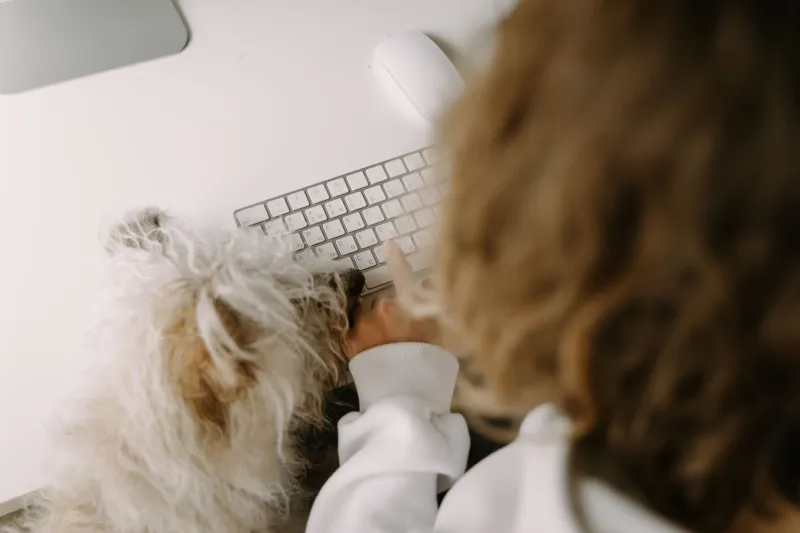
When remote work became the norm for a significant chunk of the American workforce, dog owners felt a particular kind of relief. No more guilt about long workdays. No more rushing home at lunch. Just you, your laptop, and a very happy dog underfoot. It felt like a win for everyone.
Fast forward a few years, and veterinary behaviorists are seeing something unexpected: a new wave of anxious dogs—not because their owners are gone too much, but in many cases, because their owners are home too much. The dynamic has quietly shifted, and a lot of New Haven pet owners are only now starting to connect the dots between their work-from-home routine and their dog's increasingly clingy, unsettled behavior.
The Old Anxiety vs. The New Anxiety
Classic separation anxiety is well-documented. A dog who was left alone regularly developed a predictable routine around it. The owner leaves, the dog is stressed, the owner returns, the dog recovers. Difficult, but at least the pattern was consistent.
What's emerging now is something slightly different: dependency anxiety. Dogs who've spent months or years with a person present nearly 24 hours a day have recalibrated their baseline. Constant human proximity isn't a treat anymore—it's the expectation. And when that expectation is violated, even briefly, the response can be disproportionate.
This means a dog who was perfectly fine being alone before 2020 might now lose it when their owner steps out to grab groceries. A dog who never showed signs of separation distress might now follow their owner from room to room, panting and pacing the moment a door closes between them. The problem isn't the absence itself—it's that the dog has lost the psychological toolkit to handle it.
Recognizing the Signs
Dependency anxiety doesn't always look dramatic. You're not necessarily coming home to chewed furniture and neighbor complaints (though that happens too). Sometimes the signs are subtler:
- Velcro behavior: Your dog follows you everywhere, including the bathroom, and seems unable to settle when you're not within sight.
- Anticipatory distress: Your dog starts showing stress signals—panting, pacing, whining—when you put on shoes or pick up your keys, even if you're just taking out the trash.
- Inability to rest independently: Your dog can only sleep or relax when physically touching you or in the same room.
- Excessive greeting behavior: Over-the-top reactions when you return after even very short absences.
- Disrupted eating or drinking: Some anxious dogs won't eat or drink while their owner is away.
- Destructive behavior or house-soiling: These are the more visible signs that something is wrong.
If several of these sound familiar, it's worth taking seriously. Anxiety in dogs isn't just an inconvenience—it's a welfare issue. A dog living in a state of chronic low-grade stress is not a happy dog, regardless of how much time you spend together.
Why This Is Especially Relevant Right Now
Here's the kicker: many remote workers are starting to return to offices, at least part-time. Hybrid schedules are common across New Haven's employment landscape, and what that means for dogs who've adapted to constant company is a sudden, jarring shift. The transition from "always home" to "gone three days a week" can be genuinely traumatic for a dog who's never been asked to cope with that level of solitude.
Even if your schedule hasn't changed, the problem compounds over time. The longer a dog goes without practicing independence, the harder it becomes to rebuild that capacity later.
Building Healthy Independence Without Being Cruel About It
The goal isn't to ignore your dog or artificially deprive them of your company. It's to help them develop a secure, stable sense of self that doesn't require your constant presence to maintain. Think of it as building emotional resilience rather than forcing independence.
Practice micro-separations. Start small. Close a door between you and your dog for five minutes while you work. Work up to 15 minutes, then 30. The dog learns that your absence is temporary and non-threatening. This sounds almost too simple, but consistency matters enormously here.
Create a designated "settle" spot. Train your dog to go to a specific bed or mat and stay there calmly while you work. This isn't a punishment—it's a skill. Use treats, calm praise, and patience. A dog who knows how to settle independently is a more confident dog.
Vary your routine deliberately. If your dog can predict your every move, they'll become hypervigilant about changes. Put on your shoes and then stay home. Pick up your keys and sit back down. Go out for five minutes and come back. Breaking the predictability of departure cues reduces anticipatory anxiety significantly.
Don't make departures and arrivals emotional. It's tempting to give big goodbye kisses and enthusiastic greetings, but this actually amplifies your dog's emotional response to your coming and going. Low-key, matter-of-fact departures and returns help normalize the experience.
Ensure adequate exercise and mental stimulation. A tired, mentally engaged dog is less likely to spiral into anxiety. Morning walks before your workday begins, puzzle feeders at meal time, and training sessions throughout the day burn energy and build confidence in ways that just coexisting in the same room doesn't.
When to Bring in Professional Help
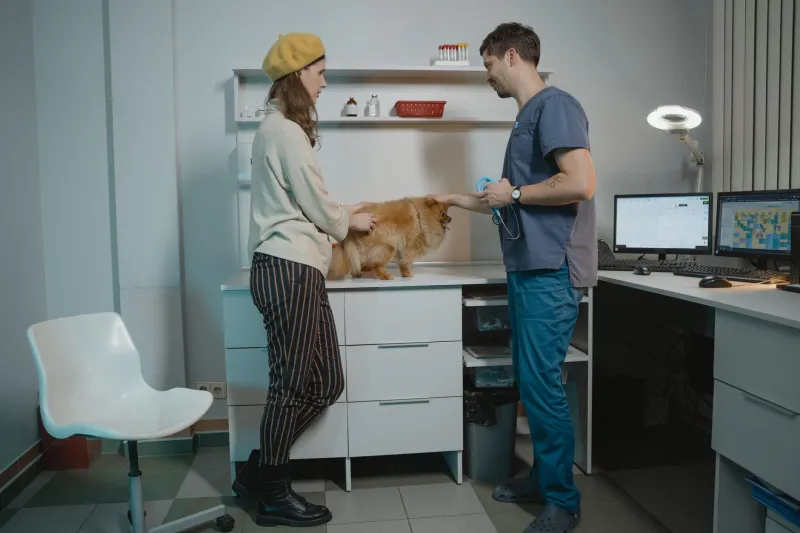
Some dogs need more than behavioral management strategies from their owners. If your dog's anxiety is severe—if they're injuring themselves trying to escape, refusing to eat for extended periods, or showing extreme distress even with gradual desensitization work—it's time to involve a professional.
Start with your vet. Anxiety has a physiological component, and in moderate to severe cases, medication can make behavioral training significantly more effective. Anti-anxiety medications don't sedate dogs or change their personality—they take the edge off enough that the dog can actually learn.
For complex cases, ask for a referral to a veterinary behaviorist or a certified applied animal behaviorist. These are specialists with advanced training in animal behavior and psychology, and they're equipped to build individualized treatment plans. New Haven pet owners also have access to certified professional dog trainers who specialize in anxiety and reactivity—your vet can help point you toward reputable options.
The Bigger Picture
None of this means you shouldn't enjoy having your dog nearby while you work. That's one of the genuinely lovely parts of remote work. The goal is balance: a dog who loves your company but doesn't need it every waking moment to feel safe.
A secure dog can handle your absence with equanimity. They can rest while you're in another room. They can be home alone for a few hours without falling apart. That's not a dog who loves you less—it's a dog who trusts that you'll come back, and who has the inner resources to wait comfortably until you do. Building that trust is one of the most important things you can do for your dog's long-term wellbeing.