That Tiny Chip Could Bring Your Pet Home: Everything New Haven Owners Need to Know About Microchipping
Every year, millions of pets go missing across the United States. Some wander off during a backyard escape. Others bolt during a thunderstorm. A few slip out an open door while a delivery driver knocks. And a heartbreaking number of them never make it home—not because their owners stopped looking, but because there was no reliable way to connect the dots.
A microchip changes that equation dramatically. It's one of the simplest, most affordable, and most permanent things you can do to protect your pet. And yet, plenty of New Haven pet owners still have questions, misconceptions, or just haven't gotten around to it. Let's fix that.
So, What Actually Is a Microchip?
Here's the short version: a microchip is a tiny electronic device—roughly the size of a grain of rice—that gets injected just beneath your pet's skin, typically between the shoulder blades. It contains a unique identification number that can be read by a universal scanner. That number links to your contact information in a national pet recovery database.
That's it. No moving parts, no battery, no GPS signal. The chip is entirely passive, meaning it doesn't do anything until a scanner activates it. When an animal shelter, veterinary clinic, or animal control officer scans a found pet, the number pops up, they search the registry, and—if your info is current—they call you.
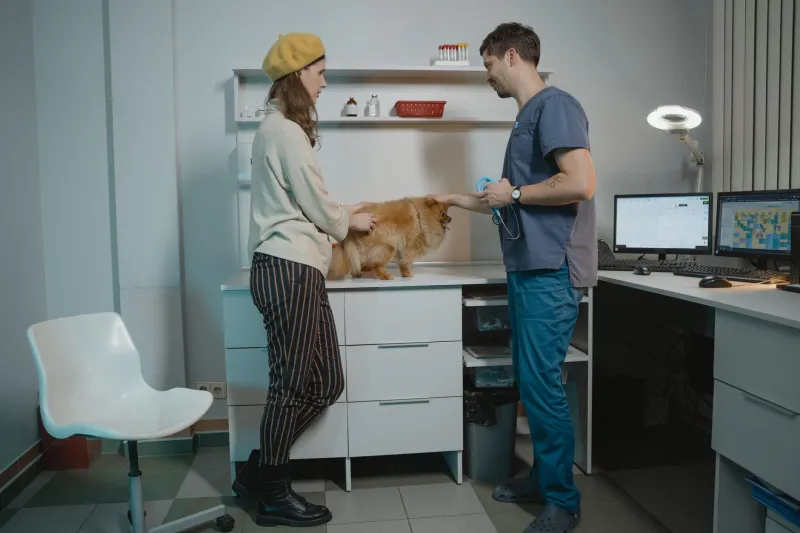
The whole implantation process takes about the same amount of time as a routine vaccine. Most pets barely react. Some flinch slightly; others don't notice at all.
Let's Kill the Myths Right Now
Myth #1: It tracks my pet's location. This is the big one. Microchips are not GPS devices. They don't broadcast a signal, they don't connect to your phone, and they won't help you find a lost pet in real time. What they do is provide irrefutable proof of ownership and a direct line to your contact information once your pet is found and scanned. If you want live location tracking, a GPS collar attachment is a separate product entirely.
Myth #2: It hurts. The needle used to implant a microchip is larger than a standard vaccine needle, yes. But the procedure is quick—a single injection—and most vets describe their patients' reactions as minimal. If your pet is already going under anesthesia for a spay, neuter, or dental procedure, that's an ideal time to microchip since they won't feel a thing.
Myth #3: It's expensive. Microchipping typically costs between $25 and $75 at a private veterinary clinic, and community clinics and local shelters often offer it at a reduced rate or even for free during special events. For a one-time, lifetime identification solution, it's genuinely one of the best values in pet care.
Myth #4: Indoor pets don't need one. Ask anyone who's had an indoor cat slip out during a home repair project. Accidents happen to even the most cautious pet owners. A microchip is exactly the kind of backup you hope you never need.
Connecticut's Rules and Why They Matter
Connecticut has taken a clear stance on microchipping. State law requires that dogs and cats adopted from Connecticut shelters and rescue organizations be microchipped prior to adoption. Animal control officers across the state are equipped with universal scanners, and any stray animal brought to a shelter is scanned immediately upon intake.
New Haven's municipal animal control follows this same protocol. If your unchipped dog is picked up and taken to the shelter, staff have no way to identify you as the owner unless someone recognizes the animal or you come looking. Without a chip or current ID tags, the reunification process becomes slower, more stressful, and sometimes impossible—especially if the shelter is at capacity and holding times are limited.
It's also worth noting that microchip registration is separate from the implantation itself. Getting the chip put in is step one. Registering that chip number in a national database—like Found Animals, HomeAgain, or the AAHA Universal Pet Microchip Lookup—is step two. Both matter equally. An unregistered chip is like a key with no lock.
Real Reunions Happen in New Haven
The staff at local New Haven shelters have seen it firsthand: a dog comes in, gets scanned, and within an hour the owner is at the front desk in tears. These reunions happen regularly, and the common thread is almost always that chip.
One shelter volunteer described a case where a dog had been missing for over two weeks, had traveled miles from home, and was brought in by a good Samaritan who found him near the waterfront. The chip was scanned, the registration was current, and the family was reunited the same afternoon. Without that chip, the dog almost certainly would have been listed as a stray with no traceable owner.
These stories aren't rare. According to the American Veterinary Medical Association, microchipped dogs are returned to their owners at more than twice the rate of unchipped dogs. For cats, the difference is even more dramatic.
How to Get Your Pet Microchipped in New Haven
The process is genuinely simple. Here's what it looks like:
- Schedule an appointment with your regular vet, or check with the New Haven Animal Shelter or local rescue organizations for low-cost microchipping events.
- Bring your pet in and let the vet or technician walk you through the procedure. It takes minutes.
- Record the chip number. You'll receive documentation with the unique ID number. Keep this somewhere safe.
- Register the chip in at least one national database. Many vets will do this as part of the service, but confirm it's been completed and that your contact information is accurate.
- Update your info any time you move or change phone numbers. An outdated registration is almost as useless as no registration at all.
If you've adopted a pet and you're not sure whether they're chipped, ask your vet to scan them at your next visit. It takes seconds.
The Bottom Line
Microchipping isn't a substitute for a collar and ID tags—you want both. But it's the one form of identification that can't fall off, fade, or be removed. For New Haven pet owners, it's a straightforward, affordable, and genuinely life-saving step. There's really no good reason to skip it.