Inside, Outside, or Somewhere in Between? The Real Answers to the Indoor-Outdoor Cat Question
Ask a room full of cat owners whether their pets should go outside, and you'll get a room full of strong opinions. The outdoor camp will tell you that keeping a cat cooped up is unnatural, even cruel. The indoor camp will counter with traffic statistics and predator lists. Both sides have a point. Neither side has the complete picture.
This isn't a topic with a single correct answer for every cat in every situation—but it's one where the evidence leans pretty clearly in one direction, and where understanding the local environment makes a real difference. If you're a cat owner in New Haven, here's what you actually need to know.
What the Data Says About Lifespan
Let's start with the most sobering number: the average outdoor or free-roaming cat lives somewhere between 2 and 5 years. The average indoor cat lives 12 to 18 years. That gap is enormous, and it's not a coincidence.
Outdoor cats face a gauntlet of risks that their indoor counterparts simply don't encounter: vehicle traffic, predators (coyotes are increasingly common in and around New Haven), infectious diseases spread through contact with other animals, parasites, toxic plants, and the occasional human who isn't thrilled about neighborhood cats. Feline leukemia virus, FIV, and upper respiratory infections spread rapidly among free-roaming cats.
Indoor cats, by comparison, live in a controlled environment where most of those variables are removed. They're more likely to stay current on vaccinations, more likely to be seen by a vet regularly, and less likely to sustain traumatic injuries.
This doesn't mean outdoor cats can't live long, healthy lives—plenty do. But statistically, the risks are real and they're significant.
The New Haven Factor
Context matters here. The risk calculus for a cat living in a rural farmhouse with low traffic and open land is genuinely different from the risk calculus for a cat in a dense New Haven neighborhood near a busy road.
New Haven's urban core—Wooster Square, East Rock, Westville, the Hill—involves real traffic, limited green space, and close proximity to other animals including strays. Suburban edges of the city offer a bit more room, but coyote sightings have become common enough in Connecticut that the state DEEP regularly issues guidance for pet owners. Coyotes are active at dawn, dusk, and overnight, and small cats are absolutely on their radar.
There's also the question of local wildlife. Cats are skilled hunters, and free-roaming cats have a measurable impact on bird and small mammal populations. The American Bird Conservancy estimates that outdoor cats kill billions of birds annually in the United States. For New Haven residents who care about the health of local ecosystems—including the bird populations that draw visitors to East Rock Park and the West River Memorial Park trails—this is worth considering.
But Don't Cats Need Freedom?
This is the heart of the pro-outdoor argument, and it deserves a genuine response rather than a dismissal.
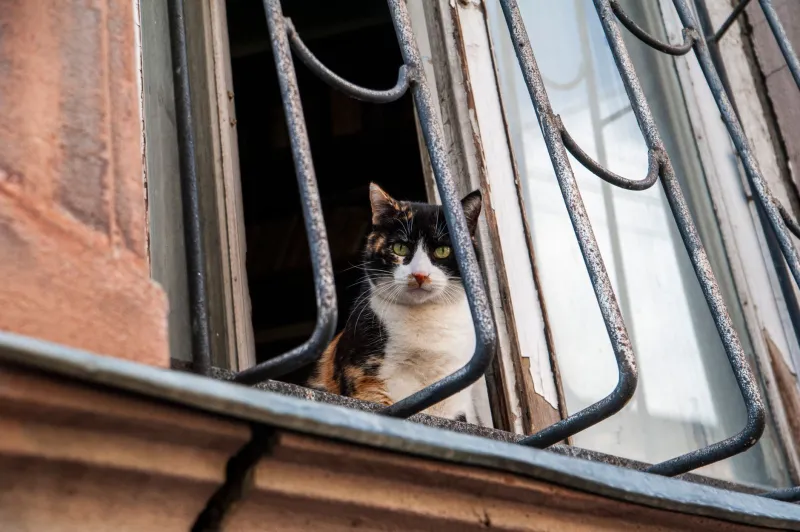
Cats are predators. They have hunting instincts, territorial behavior, and a natural drive to explore. Denying those impulses entirely can lead to boredom, frustration, and behavioral problems—scratching furniture, excessive vocalization, overeating, or aggression. A cat that stares longingly out the window all day isn't thriving.
The key insight is that the goal isn't to keep a cat physically contained at all costs—it's to meet the cat's behavioral and psychological needs in a way that doesn't require exposing them to unnecessary danger. That's a design problem, and it has solutions.
Making Indoor Life Actually Work
An enriched indoor environment looks very different from a bare apartment with a food bowl and a litter box. Cats need vertical space, stimulation, and opportunities to express natural behaviors.
Some practical starting points:
- Vertical territory: Cat trees, wall-mounted shelves, and window perches give cats the elevated vantage points they instinctively seek. A cat with good vertical real estate is a more content cat.
- Hunting-style play: Interactive wand toys, puzzle feeders, and food-dispensing toys engage the predatory sequence—stalk, chase, pounce, catch—that cats need to feel mentally satisfied. Even 10-15 minutes of active play daily makes a noticeable difference.
- Window enrichment: A bird feeder positioned near a window can provide hours of stimulation. Some cat owners play nature videos or ambient bird sounds for similar effect.
- Rotation and novelty: Cats habituate quickly. Rotating toys, rearranging furniture occasionally, or introducing new scents (catnip, silver vine, valerian) keeps the environment feeling fresh.
- Feline companionship: For some cats—not all—a second cat provides social stimulation and play that humans can't fully replicate. This is highly individual and worth discussing with your vet.
The Middle Ground: Catios and Leash Training
The indoor-outdoor binary isn't the only option. Many cat owners in New Haven have found genuine success with middle-ground solutions that offer outdoor exposure without free-roaming risk.
Catios—enclosed outdoor structures attached to a window or door—have become increasingly popular, and for good reason. They give cats fresh air, natural light, outdoor sights and sounds, and the ability to watch birds and squirrels up close, all without the ability to wander into traffic or encounter a coyote. Catios range from simple window box enclosures to elaborate multi-level garden structures. Even a modest setup can dramatically improve an indoor cat's quality of life.
Leash and harness walking is another option that surprises people but genuinely works for many cats, particularly those introduced to the harness as kittens. It requires patience and a cat with the right temperament, but supervised outdoor time on a leash offers the best of both worlds.
What Your Vet Will Tell You
Veterinarians, by and large, recommend indoor living for cats—especially in urban environments. It's not because they don't understand feline nature; it's because they've seen too many cats come in with injuries, infections, and toxin exposures that were entirely preventable.
That said, good vets are also pragmatic. If you have a cat who was outdoor-raised and becomes genuinely distressed when kept inside, the conversation becomes more nuanced. The goal is always the best possible life for the individual animal, and that sometimes involves compromise.
The honest answer to the indoor-outdoor question? Indoor living, thoughtfully enriched, is the safer and typically healthier choice for New Haven cats. But an indoor cat who's bored, under-stimulated, and ignored isn't living a great life either. The real work is in making indoor life genuinely good—not just physically safe.